Why the Blue Ridge Mountains Put on the Best Fall Show
The Blue Ridge Mountains of Western North Carolina are widely considered one of the best places in the United States to experience fall color. The combination of elevation range, diverse tree species, and the Blue Ridge haze that gives the mountains their name creates a landscape that turns gold, red, and orange across a months-long window. The region around Yellow Mountain Vista — Cashiers, Highlands, Lake Glenville, and the surrounding Nantahala National Forest — sits at the heart of it. But understanding when to come requires understanding how elevation works. Peak color is not a single weekend. It is a cascading event that sweeps down the mountains over several weeks.
How Elevation Controls Fall Color Timing
This is the single most important thing to understand about fall color in Western North Carolina: the mountains do not all change color at the same time. Color begins at the highest elevations and works its way downhill. At 4,000–6,000 feet — the elevation of Yellow Mountain Vista, Whiteside Mountain, and the ridgelines around Highlands — color typically begins turning in late September to early October. The Blue Ridge Parkway, which reaches above 6,000 feet in places, can see color as early as mid-September. By mid-to-late October, peak color has usually descended to the 2,500–4,000 foot range, which includes the valleys around Cashiers, Lake Glenville, and the lower Cullasaja Gorge. By late October into early November, color reaches the lower elevations around Franklin, Sylva, and the Piedmont foothills. This means there is no single "peak weekend." There is a peak window — and it shifts by several hundred feet of elevation at a time.
Best Viewing Windows Near Yellow Mountain Vista
Because Yellow Mountain Vista sits at approximately 4,400 feet, you are positioned right in the heart of the early-to-mid October color zone. Here is a rough guide to the windows — not guarantees, because weather varies each year, but a reliable framework for planning. Late September to early October: the highest ridgelines (above 5,000 feet) begin turning. The Blue Ridge Parkway near Mount Pisgah and Graveyard Fields is often spectacular during this window. Early to mid October: the 4,000–5,000 foot zone reaches peak. This is when the forests immediately around Yellow Mountain Vista, Whiteside Mountain, and the Highlands plateau are typically at their best. Mid to late October: color descends to the 2,500–4,000 foot range. Cashiers, Lake Glenville, and the lower gorge roads are usually peaking. Late October to early November: the lower elevations around Franklin, Sylva, and the valley floors turn. We cannot promise an exact peak date — no one responsibly can, because it depends on rainfall, temperature, and the first hard frost. But if you book between early October and late October, you will almost certainly see excellent color somewhere within a short drive of the cabin.
The Best Fall Color Drives
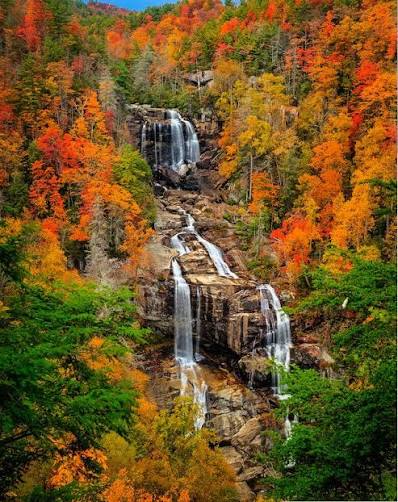
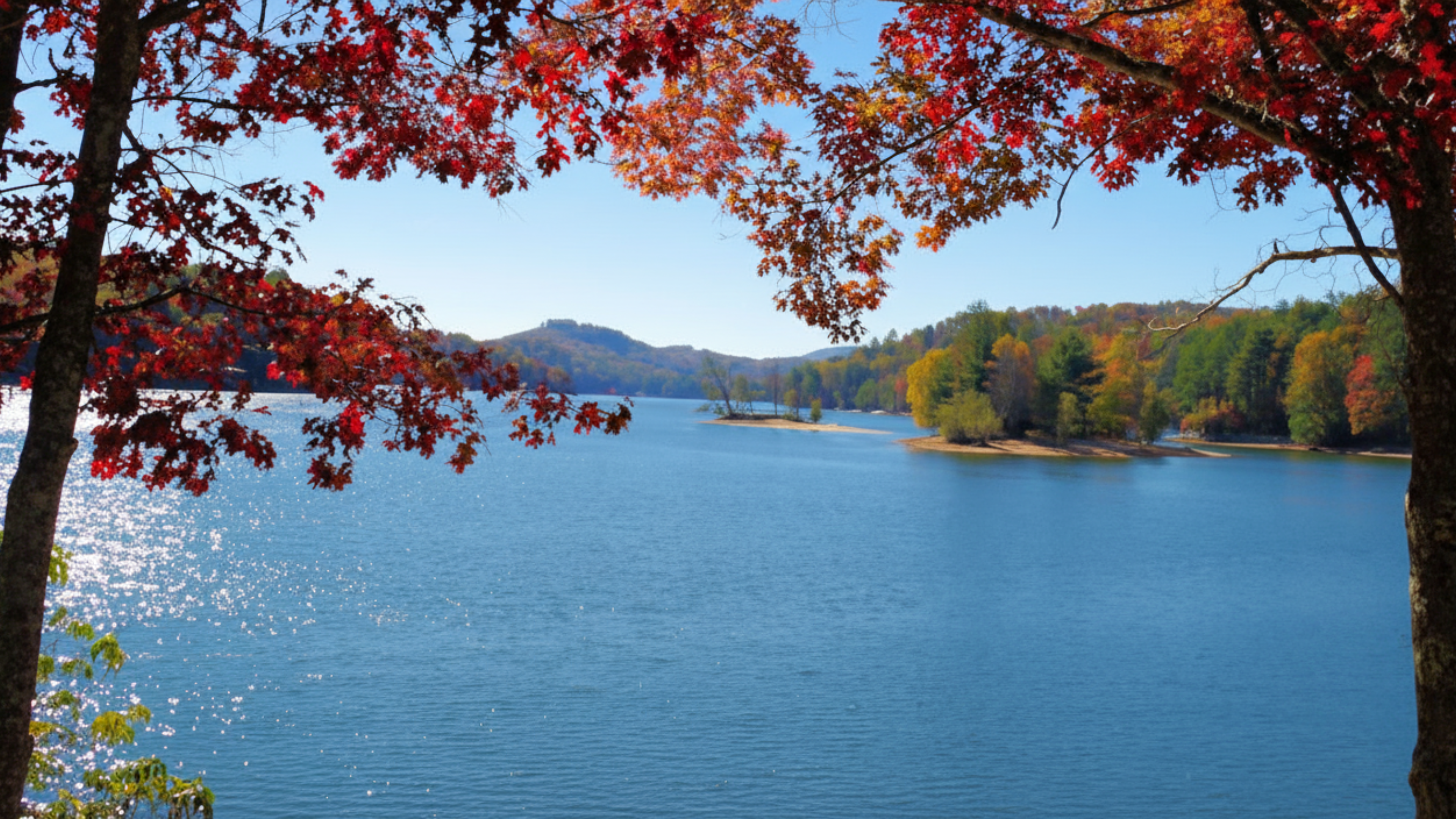
The Cullasaja Gorge (US-64) between Highlands and Franklin is one of the most dramatic fall color drives in the eastern United States. The steep rock walls of the gorge are lined with color in October, and the waterfalls along the route — Bridal Veil Falls, Dry Falls, Cullasaja Falls — are framed by golden and red foliage. The gorge is narrow and winding, so drive carefully and use designated pull-offs. The Cashiers-to-Lake Glenville loop (NC-107) is a gentler drive that climbs through hardwood forests and opens to lake views framed by color. The Blue Ridge Parkway, about an hour from the cabin, offers ridge-line overlooks with views stretching 50+ miles on clear days. In October, the Parkway is spectacular — but it is also the busiest time of year. Go early in the morning or on a weekday. The Cashiers-to-Sapphire Valley drive along US-64 is a shorter, more relaxed option with mountain views on both sides and the option to stop at Silver Run Falls.
Best Hikes for Fall Color
Whiteside Mountain is arguably the best fall color hike near Yellow Mountain Vista. The roughly two-mile loop climbs to a 4,930-foot summit with overlooks that span the surrounding valleys — and in October, those valleys are a patchwork of red, gold, and orange. Because Whiteside is at a higher elevation, it peaks slightly earlier than the valleys below, usually in early-to-mid October. Glen Falls, just outside Highlands, combines forest hiking with multiple waterfall viewpoints — and the forest along the trail turns brilliantly in mid-October. For a longer adventure, Panthertown Valley offers deep-woods hiking through valleys and along creeks that are spectacular in fall. The trails around Graveyard Fields on the Blue Ridge Parkway are famous for fall color and high-elevation views, though they require a longer drive from the cabin. Always check trail conditions before heading out, and bring layers — October temperatures at 4,000+ feet can range from the 30s in the morning to the 60s by afternoon.
Photography Tips for Fall Color
The best fall color photography happens in the first hour after sunrise and the last hour before sunset — the "golden hours" when the light is warm, soft, and directional. In the mountains, morning often brings valley fog that adds depth and atmosphere to landscape shots. The overlooks along the Blue Ridge Parkway and the summit of Whiteside Mountain are excellent for wide landscape shots. For waterfall photography, overcast days are actually better than sunny ones — the soft light prevents harsh contrast and brings out the saturated colors of the wet rocks and surrounding foliage. Use a tripod for waterfall shots if you want to blur the water with a slow shutter speed. A polarizing filter helps reduce glare on wet leaves and water, and it deepens the blue of the sky. Do not forget to put the camera down occasionally. Some of the best fall color moments are not the ones you photograph — they are the ones you stand in.
What Trees Create the Color
The diversity of tree species in the Blue Ridge is why the fall color here is so varied. Red maple and sugar maple produce the vivid reds and oranges. Hickory and birch turn bright yellow. Sourwood and black gum produce deep maroon. Oak species turn russet and brown, often later in the season. The combination — sometimes a dozen species in a single view — is what gives the mountains their patchwork appearance. The Blue Ridge haze, caused by isoprene released by the trees, softens the distant ridgelines and gives the landscape its characteristic layered, almost painted quality. It is not a trick of the camera. It looks like that in person.
Why You Should Not Chase "Peak" Dates
Every year, fall foliage forecasters attempt to predict the exact weekend of "peak color." These predictions are well-intentioned but inherently unreliable. Peak color depends on rainfall throughout the summer, the timing of the first cold snap, and wind — a strong storm in mid-October can strip the trees in a single afternoon. Instead of chasing a single weekend, plan a trip during the broader window of early-to-late October. If you are staying at Yellow Mountain Vista, you are positioned at 4,400 feet — right in the middle of the action. If the color at the cabin has not peaked yet, drive up to the Parkway. If the color at the cabin is past peak, drive down into the valleys. The elevation range within an hour of the cabin means you can almost always find excellent color somewhere nearby throughout October.
Booking Strategy for Fall Season
Fall is the busiest season in the Cashiers-Highlands area. Cabins, hotels, and restaurants fill up weeks in advance, especially on October weekends. If you want to stay at Yellow Mountain Vista during peak fall color, book as early as possible — ideally months ahead. Weekdays in October are significantly easier to book than weekends, and they offer a quieter experience on the trails and scenic drives. If your dates are flexible, aim for mid-October, which historically offers the best combination of color at the cabin elevation and in the surrounding valleys. But do not stress about hitting the exact peak. The mountains are beautiful from late September through early November, and the experience of being here — the cool air, the smell of woodsmoke, the sound of leaves in the wind — is as much a part of fall as the color itself.
What to Pack for a Fall Trip
Layers — October temperatures at 4,400 feet can range from the 30s in the morning to the 60s by afternoon. A warm jacket for early morning deck time and evening stargazing. Sturdy hiking shoes with good traction — fall leaves on trails can be as slippery as wet rocks. A camera or phone with plenty of storage — you will take more photos than you expect. A reusable water bottle — the mountain air is dry even when it is cool. Sunglasses — the autumn sun is low and bright, especially on ridge-line drives. A printed map or downloaded offline maps — cell service is unreliable in the gorges and on the Parkway. And maybe a good book for the evenings by the fireplace.
Fall Is Not Just About the Leaves
The color gets the attention, but fall in the Western North Carolina mountains is a full sensory experience. The air smells different — cool, clean, and faintly of woodsmoke. The light is lower and warmer, casting long shadows across the ridgelines in the late afternoon. The nights are cold enough to justify the fireplace and the wood-burning stove. The stars are brighter, somehow, in the crisp autumn air. The wildlife is more active — deer and bears are foraging before winter. The pace of the mountain towns slows as the summer crowds leave, and the restaurants and shops take on a quieter, more local feel. Fall is the season when the mountains feel most like themselves. Come for the color. Stay for everything else.
Plan Your Fall Trip to Yellow Mountain Vista
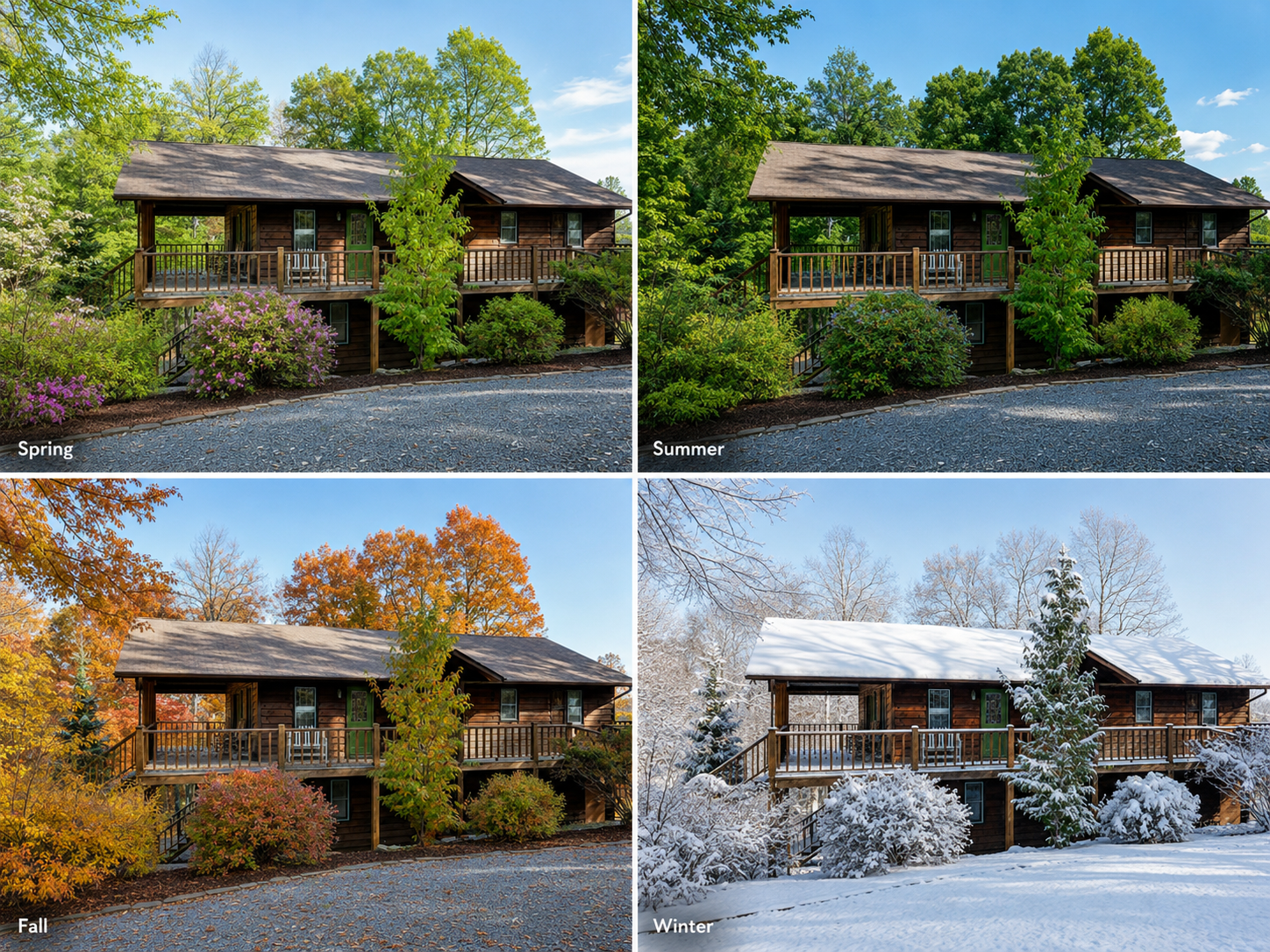
Yellow Mountain Vista is positioned at 4,400 feet in the heart of the Blue Ridge fall color zone — within 15–20 minutes of Cashiers, Highlands, and Lake Glenville, and within an hour of the Blue Ridge Parkway. Whether you want to hike, drive, photograph, or simply sit on the deck with a cup of coffee and watch the mountains turn, the cabin is your base camp for peak leaf season. Book early — fall dates go fast. And do not worry about hitting the exact peak weekend. The color is coming. It always does. Check availability for your October dates and plan your fall mountain trip.
Explore More of the Mountains
Planning the rest of your stay? Use the Yellow Mountain Vista Explorer Guide to discover waterfalls, hiking trails, Lake Glenville activities, restaurants, scenic drives, day trips, and local favorites.
Explore the Full GuidePlan Your Mountain Retreat
Experience Yellow Mountain Vista — 4,400 ft of Blue Ridge beauty, panoramic mountain views, and easy access to everything you just read about.